



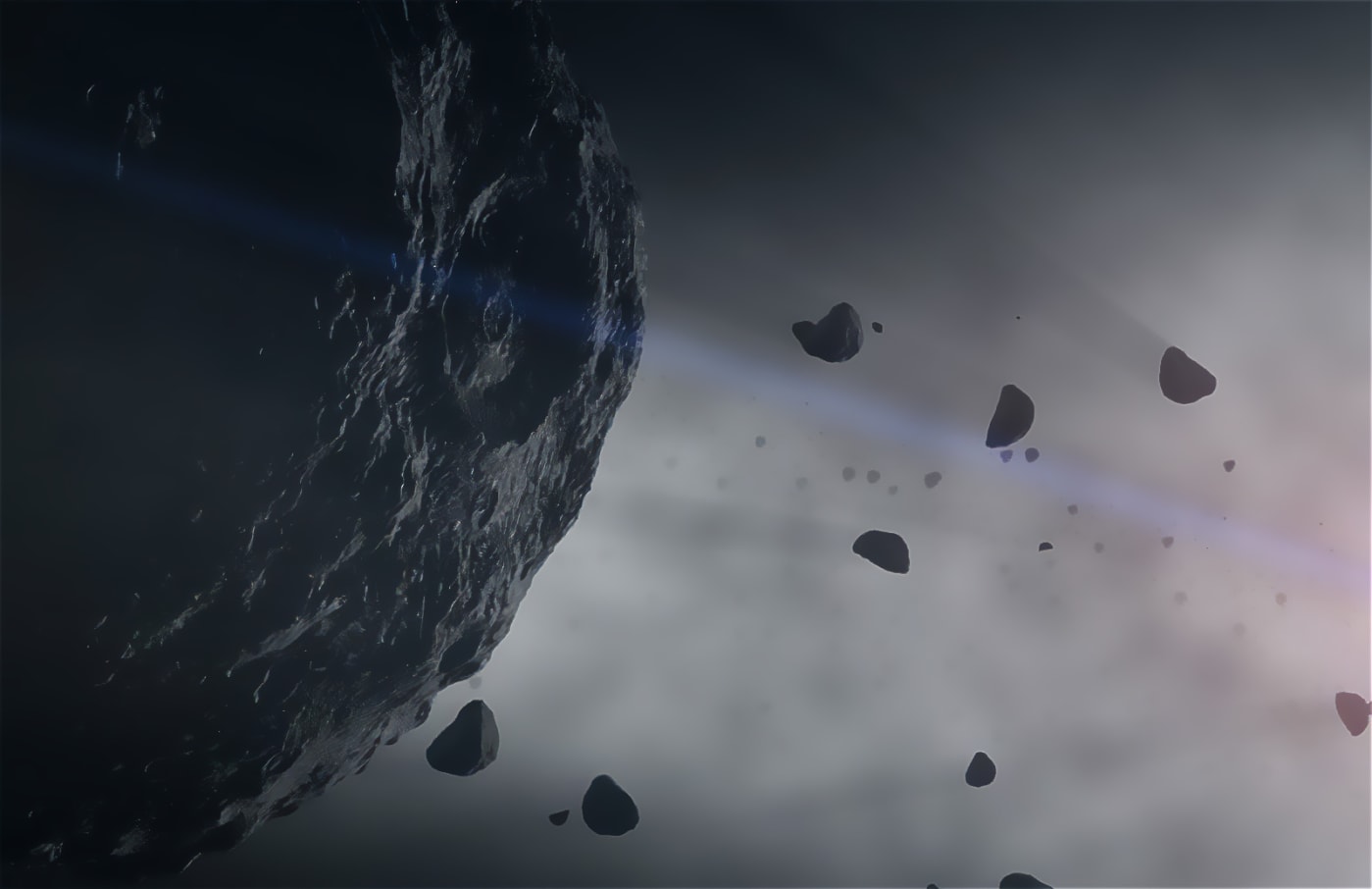
NASA and its partners have published the first wave of information about the samples collected in the OSIRIS-REx mission. “The findings do not show evidence for life itself, but they do suggest the conditions necessary for the emergence of life were widespread across the early solar system, increasing the odds life could have formed on other planets and moons,” NASA said in a press release.
The OSIRIS-REx mission used some pretty fascinating tech to autonomously acquire rocks and dust from an asteroid called Bennu. Asteroids can act as time capsules, and Bennu reflects what was happening in the solar system roughly 4.5 billion years ago. After a total journey of 3.9 billion miles, the capsule returned safely to Earth on September 24, 2023.
One paper about Bennu, appearing in the journal Nature Astronomy, revealed that the samples contained 14 amino acids and five nucleobases also found in life forms on Earth. They also uncovered high levels of ammonia in the Bennu samples, as well as formaldehyde; when those two combine in the proper conditions, they can form complex molecules such as amino acids.
The second publication appeared in Nature, and it detailed the environment those molecules formed in. Their assessment found evidence of a “brine,” identifying a set of minerals that could have been left behind as salt water evaporated.
“Data from OSIRIS-REx adds major brushstrokes to a picture of a solar system teeming with the potential for life,” said Jason Dworkin, OSIRIS-REx project scientist at NASA Goddard. “Why we, so far, only see life on Earth and not elsewhere, that’s the truly tantalizing question.”
If you buy something through a link in this article, we may earn commission.