



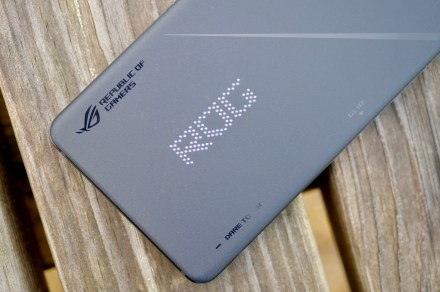
Andy Boxall / Digital Trends
Samsung, no, sorry, Asus has released the ROG Phone 9 FE. After the name was spotted over the past few weeks, the mysterious Asus phone with a name like a Samsung phone has arrived in Thailand. At the time of writing, the phone is available in Asus’s online store in the country, but it does not appear in the U.S. or the U.K. stores.
Asus ROG Phone 9 FE Asus
The addition of the FE name — which has been linked to Samsung since the Galaxy Note 7 — isn’t the only odd nomenclature decision on Asus’s part. It’s called an ROG Phone 9, but the technical specification is closer to the ROG Phone 8 Pro than the brand’s latest model. Lets take a closer look.
A Qualcomm Snapdragon 8 Gen 3 with 16GB of RAM provides the power, and not the latest Qualcomm Snapdragon 8 Elite found in the ROG Phone 9 Pro. Just like the ROG Phone 8 Pro it has a 6.78-inch AMOLED screen (ironically made by Samsung), a 5,500mAh battery with wired and wireless charging, stereo speakers, and the AniMe RGB display on the phone’s rear panel. There are no changes to the camera either, with a 50-megapixel main, a 13MP wide-angle, a 5MP macro camera, and a 32MP selfie camera.
Please enable Javascript to view this content
Surprisingly, the ROG Phone 9 FE sits alongside the ROG Phone 8 Pro in Asus’s Thailand store, but the old phone costs more to buy meaning few who compare the spec sheets will purchase the old model. Even the overall dimensions and weight are the same. The ROG Phone 9 FE is substantially cheaper than the latest ROG Phone 9 Pro and ROG Phone 9 Pro Edition models though, and once stock of the ROG Phone 8 Pro have gone, it’ll fill a gap in Asus’s product range.
However, it’s still an unusual decision to use the FE name when there are 24 other letters to choose from which aren’t connected with another brand’s devices. Whether the ROG Phone 9 FE will receive a wider launch remains to be seen.
Andy is a Senior Writer at Digital Trends, where he concentrates on mobile technology, a subject he has written about for…
This iPhone 17 Air design leak has Google Pixel written all over it
It seems Apple is finally ready for a design refresh after recycling the same aesthetics that it introduced with the iPhone 11 series. Interestingly, it won’t be a flagship phone that sets the ball rolling, but a highly-anticipated mid-tier phone that could kickstart a whole new design language for Apple smartphones.
Leakster MajinBu, who has had a mixed track record with Apple leaks, has shared what appears to be the unibody chassis for the iPhone 17 series Air. The standout element is the large pill-shaped camera bar at the top, which looks suspiciously similar to the Pixel 9 series phones.
Read more
Mystery upcoming phone may see Asus copy Samsung’s playbook
In an odd development, Asus may be taking some naming inspiration from Samsung for an unexpected upcoming release. A phone named the ROG Phone 9 FE has been spotted in benchmarking tests, combining the familiar Asus ROG Phone 9 name with Samsung’s “FE” suffix, which stands for Fan Edition.
Asus only recently released the ROG Phone 9 and ROG Phone 9 Pro, and there was no mention of a third model at the time. While we may have expected an “Ultimate” version to arrive at some point, given how the company approached the ROG Phone 7 series, the FE model may be a step down in spec from the ROG Phone 9.
Read more
I love Google Gemini, but I’ll take Apple Intelligence any day of the week
If you’re looking for the best AI experience on a phone, chances are two different AI makers come to mind. For the iPhone 16, Apple Intelligence is the answer, while for Pixel 9 series — and the best Android phones — it’s Google’s Gemini. Of course, you can also download Gemini as a standalone app on the iPhone, but Apple Intelligence is the default AI option.
Both companies offer a range of nearly identical features, at least in what they promise to offer, but there are also nuanced differences. Google Gemini is mostly focused on using AI to help you create, edit, and generate content. In contrast, Apple Intelligence focuses more on personal use cases and integration across a range of apps.
Read more