



Digital Trends may earn a commission when you buy through links on our site. Why trust us?
RTX 50 series no longer supports one of Nvidia’s oldest GPU technologies
Nvidia
Nvidia has wrapped up support for the 32-bit PhysX graphics technology. The brand has quietly removed the legacy SDK out of rotation, much to the chagrin of fans who still play the games that require the functionality.
Nvidia confirmed the end-of-life status of the GPU-accelerated physics simulation SDK, which was known for cloth simulation, shattering glass, moving liquids, and several other particle effects. PhysX is endearingly associated with AAA gaming titles including the Batman Arkham trilogy, Borderlands: The Pre-Sequel, Borderlands 2, Metro: Last Light, Metro: Exodus, Metro 2033, Mirror’s Edge, The Witcher 3, and certain older Assassin’s Creed titles.
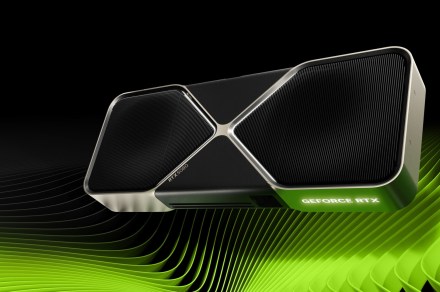
Despite being popular during the 2000s and early 2010, PhysX began to go out of favor as Nvidia upgraded other aspects of its graphics components. Its RTX 50 series became Nvidia’s new standard GPU technology. Meanwhile, PhysX floundered because it was not compatible with other GPUs, consoles, and smartphones, Tom’s Hardware noted.
Get your weekly teardown of the tech behind PC gaming
The Verge also noted Redditors discussing their disappointment at the end of support for PhysX. One member detailed forcing PhysX to run the game Borderlands 2 with terrible results. “Got drops to below 60 FPS by just standing and shooting a shock gun at a wall,” they said.
The commentator claims to have played on a high-end system featuring an RTX 5090 and an AMD Ryzen 7 9800X3D. In comparison, they said they tested the same game with an RTX 4090 GPU and maintained 120fps.
While it’s not for everyone, playing legacy games is a common hobby. Tom’s Hardware notes enthusiasts can keep PhysX support going on a PC running a RTX 50 series GPU and beyond by pairing it with an RTX 40 series or older graphics card, then tapping the latter component to work in the Nvidia control panel when necessary.
Fionna Agomuoh is a Computing Writer at Digital Trends. She covers a range of topics in the computing space, including…
Nvidia to expand RTX 50-series with more GPUs for budget gamers
Recent filings with the Eurasian Economic Commission (EEC) by popular GPU manufacturer Zotac (spotted by @harukaze5719 on X), have unveiled potential new additions to Nvidia’s RTX 50-series lineup – the RTX 5050, RTX 5060, and RTX 5060 Ti. These registrations suggest that Nvidia is preparing to introduce budget-friendly options within its latest GPU series.
The RTX 5050 is particularly noteworthy, as it would mark Nvidia’s potential return to the sub-$250 GPU market—a segment it hasn’t actively targeted since the RTX 3050. The absence of a 50-class card in the RTX 40-series left a gap that was filled by older RTX 30-series GPUs and offerings from competitors. The introduction of the RTX 5050 could provide an affordable entry point for gamers seeking to leverage Nvidia’s latest technologies without a significant financial outlay.
Read more
Nvidia’s AI obsession is causing delays in its PC business
Component manufacturer, Nvidia appears to be short on GeForce RTX 50 series GPUs for laptops, which were originally set to launch in January.
Reports indicate that the supplier has been so focused on developing AI Chips that other parts of its business have lapsed. This has caused delays in supplying the GeForce RTX 50 Series chips to computing partners.
Read more
Nvidia may release the RTX 5070 in March to counter AMD’s RDNA 4 GPUs
Nvidia’s upcoming RTX 5070 may now be launching in early March, according to industry analyst MEGAsizeGPU (@Zed__Wang on X). Initially expected to debut in February, the source suggests that the mid-range Blackwell GPU has been pushed back—potentially as a strategic move to counter AMD’s upcoming Radeon RX 9070.
Unveiled at CES 2025, the RTX 5070 is currently the most affordable GPU from the RTX 50-series lineup, at least till the RTX 5060 series goes official. It is powered by the GB205 GPU, featuring 48 Streaming Multiprocessors (SMs), 6,144 CUDA cores, and is equipped with 12GB of GDDR7 memory. The GPU utilizes a 192-bit memory interface, delivering a bandwidth of 672GB/s.
Read more